
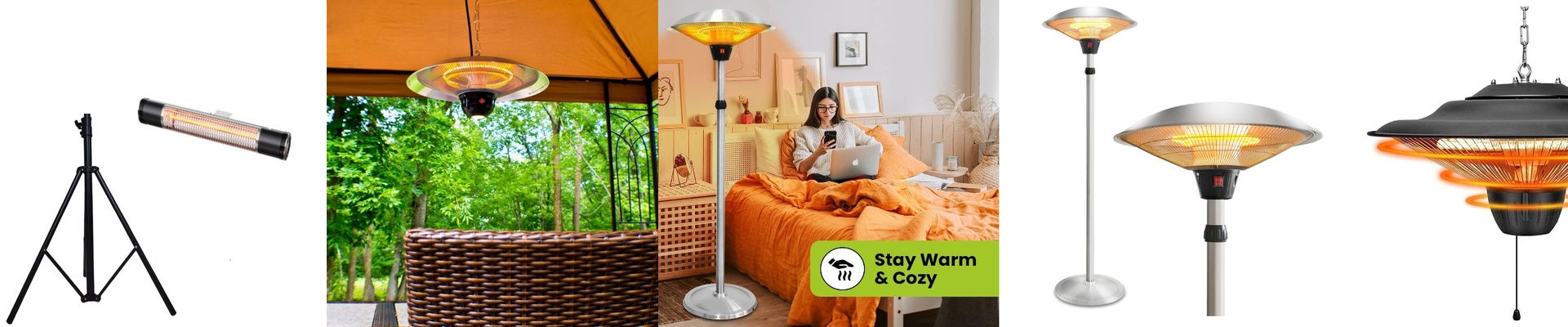

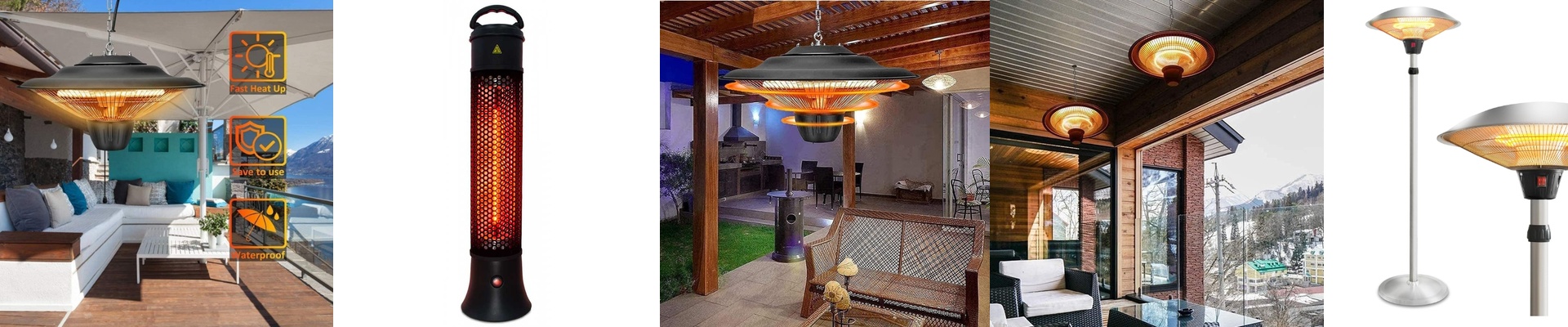


You’ve settled in—chair pulled in, book open—but the room’s just a shade too cool. The central heater is busy warming empty square footage, and drafts keep breaking your rhythm. What you want is heat that shows up fast, stays with you, and doesn’t make a fuss.
What actually matters, technically
A personal infrared electric heater delivers radiant warmth the way the sun does: it warms people and objects directly, not the air between. Inside, a carbon fiber element heats up quickly and runs quietly, giving you gentle infrared warmth with minimal glare. Most models sit in the 1,200–1,500W range on 120V, drawing only what the space you’re in actually needs. A built-in thermostat helps you hold your comfort level, and tip-over protection shuts the unit off if it gets bumped over.
Why this makes sense for the moment
For a solo reading session, an infrared heater creates a tight, personal heat zone. The warmth hits almost immediately, so you’re not waiting around for the whole room to feel “right.” Because it targets you, you avoid the energy hit of heating an entire house. The footprint stays compact and the weight stays light, so you can move it from the living room armchair to the bedroom reading corner without a second trip. You get a steady, even feel—hands warm, pages turning—without the on/off jolt of forced-air.
The practical details you’ll want to get right
Infrared warmth is most effective up close—typically within 3–6 feet—so place the heater near your chair instead of across the room. Keep the area clear; radiant heaters work best when the path to you isn’t blocked. For safety, plug the unit into a dedicated outlet, and if you need extra reach, use only an outdoor-rated extension cord. The heater is efficient for personal use, but it still pulls standard household power, so pair it with a timer or thermostat so you don’t run it longer than necessary.