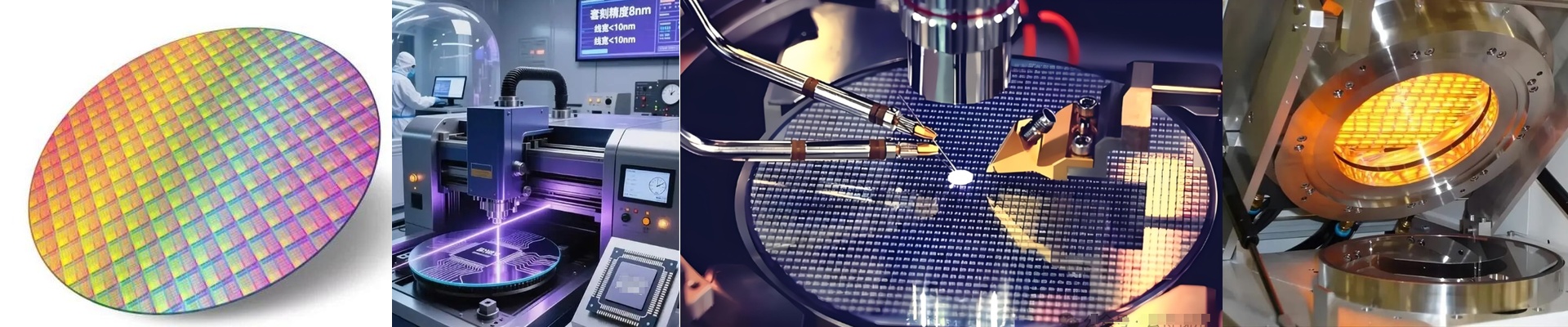
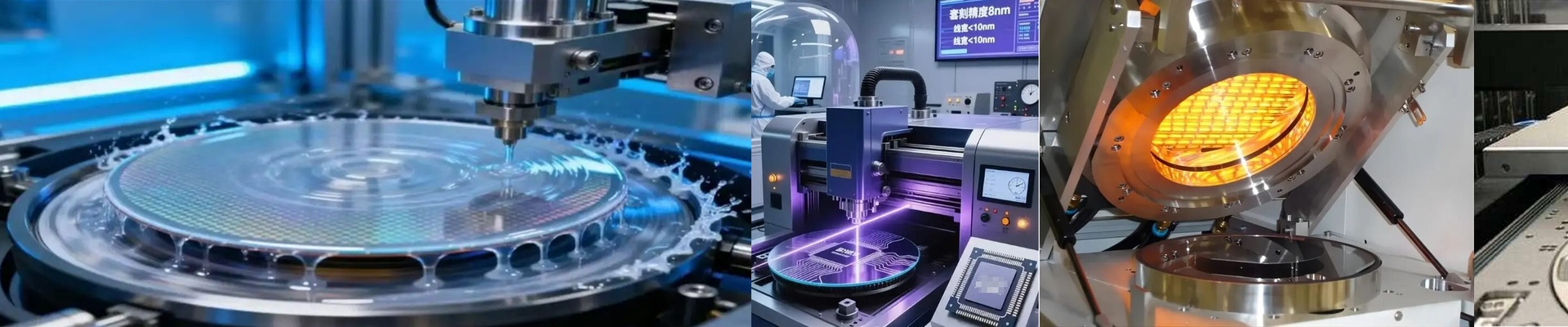

On the fab floor, the photoresist bake isn’t just another step. It’s the line where your design either makes it or doesn’t. A 1°C drift on soft bake or hard bake spreads your line-width, and the wafer leaves the track carrying a latent defect that only shows up at electrical test. Energy-efficient wafer heaters are there to hold that line steady, and to stop your thermal budget from quietly eating your margin. Here’s what matters under the hood. We built the heater around a fast-response radiant system, tuned so it stabilizes quickly without overshoot. Wafer-level uniformity stays within ±0.1°C across the active area, so every site sees the same thermal history. The design is cleanroom-compatible down to Class 1, with surfaces and seals chosen to keep particle generation at zero. Photoresist bake profiles repeat with tight delta-T, because repeatability is what turns a recipe into a result you can count on. Energy efficiency comes from matching heat output to the load and trimming standby loss—lower kWh without hurting temperature settling time. Lithography runs 24/7, and you need temperature stability that survives the shift. This heater delivers that: consistent bake performance, fewer scrap lots, and less rework from marginal adhesion or incomplete cure. Energy savings add up over time—less heat dumped into the cleanroom, lower cooling load, and fewer demand peaks on utilities. Reliability is uptime, plain and simple. When the heater holds setpoint with tight uniformity, your process window tightens in your favor, and cycle time stops jumping around. The unit integrates into existing tracks and bake plates, but treat alignment and the thermal interface as part of the install, not an afterthought. Expect a short commissioning window to lock in the profile and verify cleanroom particle performance. For the best stability, give it a stable supply voltage and adequate cooling. In high-humidity environments, double-check that the exhaust path keeps condensate out of the chamber.