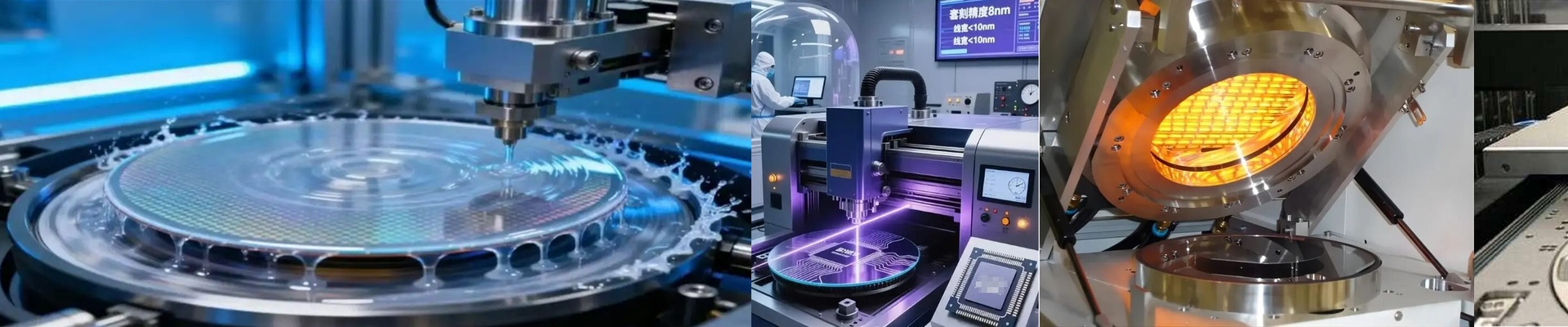
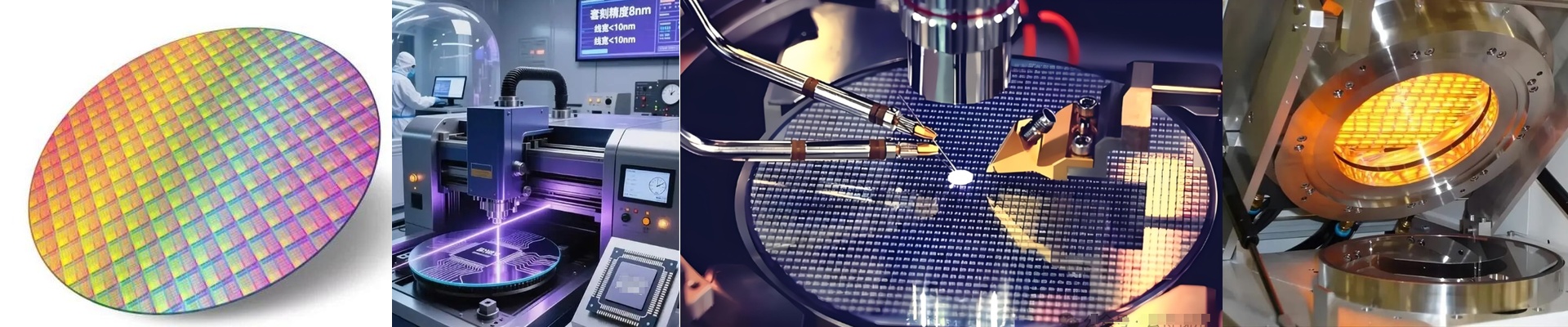

On the fab floor, photoresist bake isn’t a “best practice.” It’s a thermal commitment. A 2°C swing during soft bake or hard bake can shift critical dimensions, turn wafers into scrap, and stop the line cold. You need the heat source to hit setpoint and stay there, cycle after cycle, while the chamber stays clean. What matters, technically The quartz glass shield is built for fab lamp environments. It holds stable transmission across short-wave and medium-wave IR, and it keeps radiant heat where it should be. The quartz composition handles thermal shock and stays dimensionally stable through repeated thermal cycles. At the wafer plane, thermal uniformity is held to ±0.1°C, which is what gives you consistent photoresist bake profiles. It’s rated for cleanroom Class 1–100, with surfaces that don’t shed particles and support predictable PM intervals. Why it works in lithography and photoresist processing Yield lives and dies on thermal budget control. This shield keeps lamp output repeatable batch after batch, so your soft bake and hard bake profiles don’t drift. Fewer excursions, higher first-pass yield, less scrap. Heat is used more efficiently, so energy use drops. And when particle counts stay low and lamp thermal stability holds, unplanned downtime falls. Here’s what you need to know Installation tolerance is tight. The shield has to align to the lamp and substrate geometry within the specified clearances—misalignment creates hot spots and kills uniformity. Double-check connector type, voltage, and lamp envelope dimensions for your tool. You’ll see shorter warm-up times, but plan to inspect the quartz surface routinely. Under high thermal load, micro-cracks can show up—catch them early.