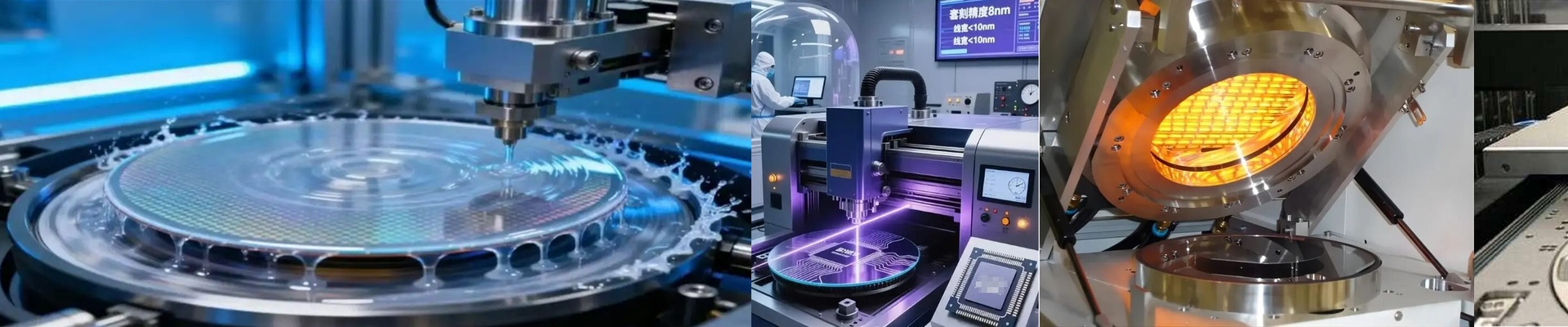
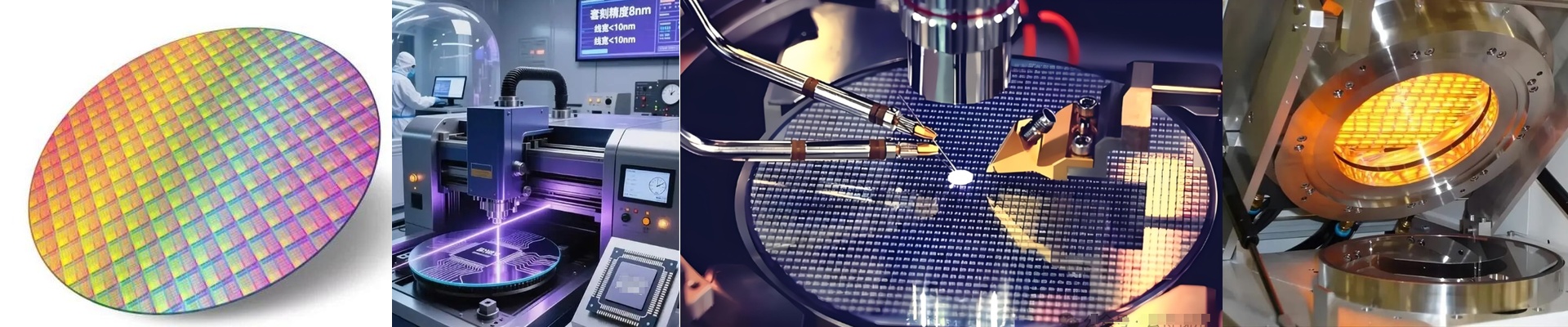

Thermal budget is the one thing you don’t negotiate with on the fab floor. A wobble in temperature uniformity during RTP will move your junction depth, and if the photoresist bake is off by even a couple of degrees, you can kiss linewidth control goodbye. That halogen lamp in the heart of the RTP system? That’s where the thermal discipline starts. What matters under the hood We spec halogen lamps with short-wave output so the energy couples cleanly into the wafer stack. You get fast ramp rates without overshoot, and the quartz envelope holds vacuum and stays chemically stable, cycle after cycle. Across the process window, wafer-level uniformity holds at ±0.1°C, and repeatability tracks from lot to lot. In a Class 1–100 cleanroom, the filtered lamp assembly and low-outgas materials keep particle generation in check, so defect counts stay flat. The lamp footprint and interface match standard RTP chambers, which makes integration straightforward and keeps the thermal coupling repeatable. Why this works in practice Lithography is where you feel it most—soft bake and hard bake need tight thermal control. With this lamp, the bake profile follows the recipe exactly, so CD uniformity improves and scum backs off. Out in front-end RTP, the short-wave halogen response is quick enough to keep the thermal budget tight, limiting dopant diffusion and keeping junctions sharp. Energy use drops because the lamp heats the target, not the chamber walls. Reliability shows up as long life with stable output, which is what you need for 24/7 schedules and fewer preventive swaps. The details that keep you out of trouble Halogen lamps run hot—cool the lamp and socket as specified, and keep an eye on coolant quality so fouling doesn’t creep into your temperature control. Match the lamp to the chamber and controller; if the spectral response is off, your profile shape drifts. Set calibration intervals to keep setpoint accuracy honest, and store spare lamps in sealed packaging to keep the quartz clean.