
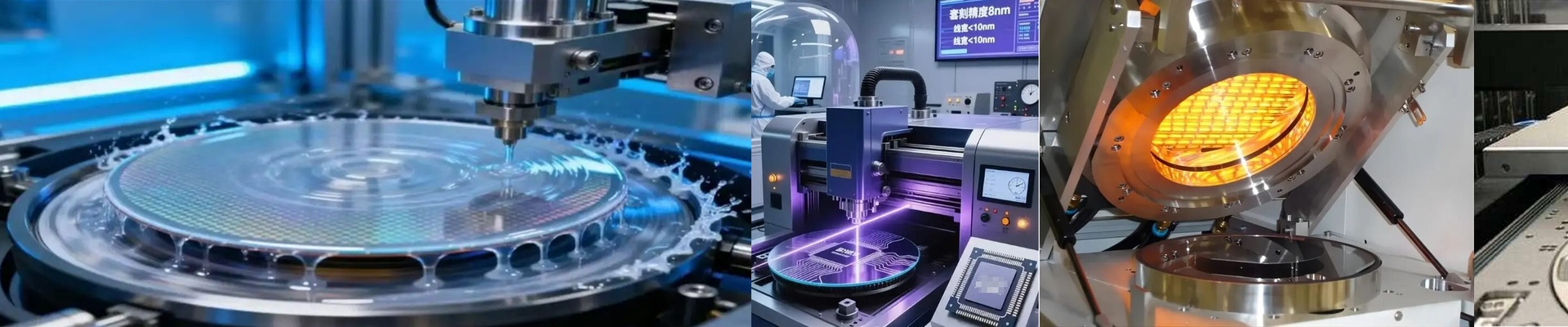


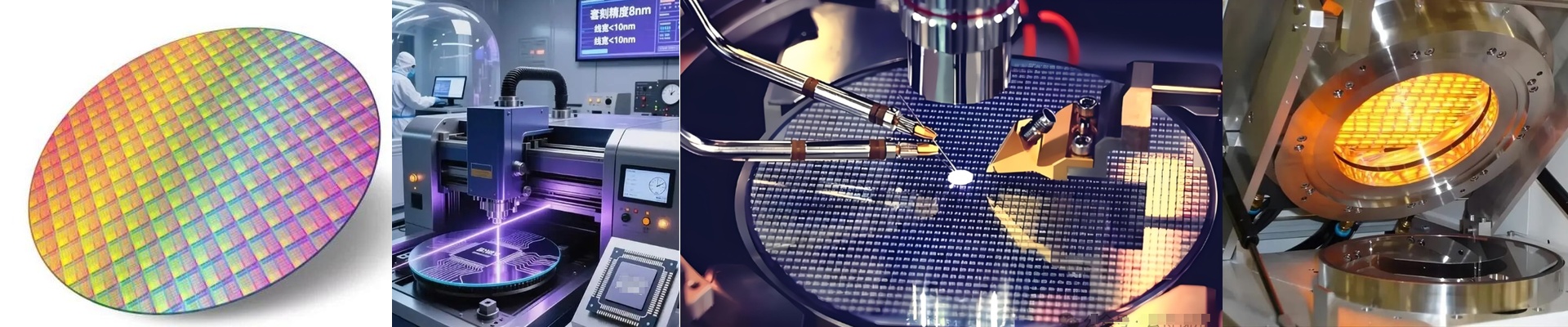

On the fab floor, thermal performance isn’t a “nice-to-have.” It’s the line in the sand between a process that stays in window and an excursion that scraps wafers. When a bake lamp starts to dim, a hot zone drifts, or a heater takes a dive, you don’t get a grace period. Lithography overlay walks off. Photoresist profiles shift. Edge bead control falls apart. Over in packaging, a cure profile that misses temperature uniformity leaves voids and delamination that surface inspection can easily overlook. You run 24/7. Your spares have to keep pace.
What actually matters, technically
When you’re sourcing thermal spares for fab equipment, you’re buying three outcomes you can measure: temperature uniformity, repeatability, and cleanroom compatibility. Spec sheets only matter once they translate into stable critical dimensions, consistent film thickness, and predictable adhesion. We design thermal elements for wafer drying, photoresist baking, and packaging curing around controlled heat delivery. Halogen, Quartz, Short Wave, Medium Wave, and Carbon Fiber—each is picked based on the application’s thermal budget and how fast you need the response. Short Wave gives you a fast ramp and tight control on thin films. Medium Wave reaches deeper for bulk curing in packaging stacks. Quartz holds up chemically through repeated thermal cycling. Carbon Fiber delivers even, low-thermal-mass heating where response time and stability are the whole game. The performance targets are practical, not academic:
- Wafer-level thermal uniformity within ±0.1°C across the active zone.
- Photoresist bake temperature precision that holds setpoint through soft bake and hard bake, with repeatable ramp profiles.
- Zero particle generation at the point of use, verified against cleanroom Class 1–100 constraints.
- 24/7 reliability with zero unplanned downtime, backed by MTBF that supports continuous operation. The details that make this happen are the kind you can inspect and verify:
- Precision-matched lamps and reflectors that hold the irradiance profile, so edge-to-edge dose stays consistent.
- Temperature sensors and control loops tuned to the tool’s thermal mass, keeping overshoot off the recipe transitions.
- Materials chosen for low outgassing and high purity, so residues don’t build up and transfer onto wafers or substrates.
- Mechanical interfaces matched to your equipment footprint—connector types, mounting geometry, and dimensional tolerances. You don’t need marketing here. You need numbers that survive a shift log and a preventive maintenance schedule.
Why this matters where you run it
Your process is spread across stations that all hinge on heat. When thermal drift shows up, you feel it immediately.
Wafer drying and cleaning
After wet cleans, the wafer has to come out dry—without microbridges or surface defects. A heater that delivers uniform temperature and stabilizes fast shortens the drying window and cuts down static carryover. Cleanroom-compatible construction keeps particle counts in check, so yield doesn’t bleed away over thousands of batches. The payoff is fewer spin-related defects and more consistent surface energy across the lot.
Photoresist processing: soft bake and hard bake
Photoresist behavior is set in the bake. Soft bake drives out solvent; hard bake locks in adhesion and etch resistance. If the hot plate drifts or lamp output varies, the resist profile goes with it. That drift shows up as line-edge roughness, bias shifts, and scum after development. Our thermal spares hold setpoint within tight tolerances, so the same bake profile gives you the same resist performance wafer after wafer. Repeatability isn’t a slogan—it’s the difference between hitting CD targets and running split lots just to find the process again.
Packaging curing
In packaging, the cure profile has to get uniform temperature through stacked materials. If heating isn’t even, you get gradients: some joints cure early, others undercure, and you end up with voids and weak bonds. Thermal elements tuned for packaging tools deliver even coverage so the entire bond line hits the target profile. That means less rework and better long-term reliability, without having to push the oven harder to compensate for hot spots.
Gains you can measure on the line
- Tighter thermal uniformity means fewer excursions and less requalification after preventive maintenance.
- Predictable ramp and soak behavior shortens changeover and cuts recipe tuning.
- Clean operation lowers scrap and recleans, especially on sensitive nodes.
- Energy use is optimized because the system reaches and holds setpoint without overshoot. These gains stack. Less variability upstream means fewer downstream failures, fewer test structures consumed, and fewer hours spent debugging a tool that’s otherwise mechanically sound.
What you need to know up front
Thermal spares only perform when the system around them is aligned. Installation and compatibility aren’t afterthoughts.
- **Tool interface:**Match the mounting footprint, electrical connectors, and sensor type. A mismatch gives you uneven contact, variable thermal resistance, and unstable control. Specify the tool model and the exact station when ordering.
- **Power supply and cooling:**Lamps and heaters draw predictable current. Make sure the power supply is within tolerance and that cooling paths—airflow, water cooling—are clean. Thermal drift often traces back to degraded cooling, not the spare itself.
- **Calibration and profiling:**Even the best element needs a calibrated profile. Use a calibrated thermocouple or pyrometer to map the wafer plane after installation. Document the profile for each recipe.
- **Cleanroom handling:**Treat spares as cleanroom-ready. Store in clean packaging. Handle with ESD-safe tools. A fingerprint or a particle on the wrong surface becomes a defect. One practical constraint: high-output lamps deliver speed and uniformity, but they demand stable thermal management. If the tool’s cooling is undersized or the chamber seals are worn, the lamp runs hotter than designed, life shortens, and output drifts. Pair the spare with a maintenance check of the surrounding hot zone—o-rings, gaskets, filters, and heat paths. You run a fab where the cost of a single hour of unplanned downtime dwarfs the price of a spare. Professional fab equipment spares aren’t just inventory. They’re the insurance that your thermal processes stay inside the spec that keeps yield on the curve. When uptime, repeatability, and cleanliness are non-negotiable, the thermal element is where the promise gets kept.